
Records can lie
An official document may preserve a decision while erasing the evidence that decision ignored.
PARDPro Cultural · Book 04
The Judge
of Ghosts
They denied him justice in life. In death, he became its judge. But authority gives him no answer to the question that follows every warrant: who decides what makes a monster?
Restrained mythic realism
The moral architecture
The story does not ask whether injustice can create anger. It asks what happens when a wronged man is given the power to decide which anger is permitted, which record is believed, and who must bear the cost of being wrong.
An official document may preserve a decision while erasing the evidence that decision ignored.
Suffering deserves recognition, but it does not grant permission to create another victim.
Responsibility begins when the judge accepts that even a necessary act can carry an irreversible cost.
Three states of one man
The three identities are not costumes. Each records a different relationship to power: excluded by it, processed by it, and finally entrusted with it.
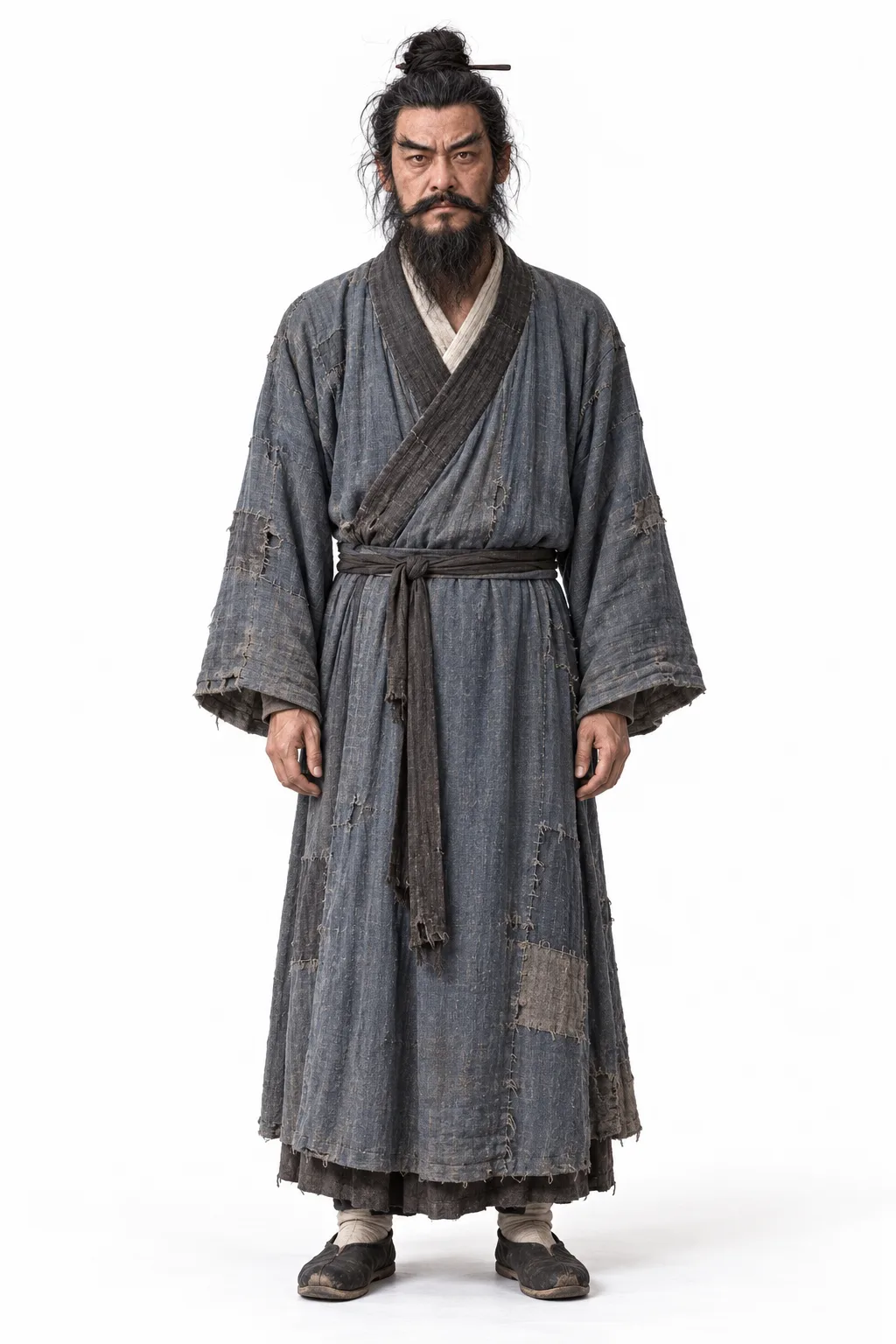
Merit without entry
A lean twenty-eight-year-old scholar in a patched blue-grey robe. He reaches the palace with learning, discipline, and no protection from the face by which power chooses to judge him.
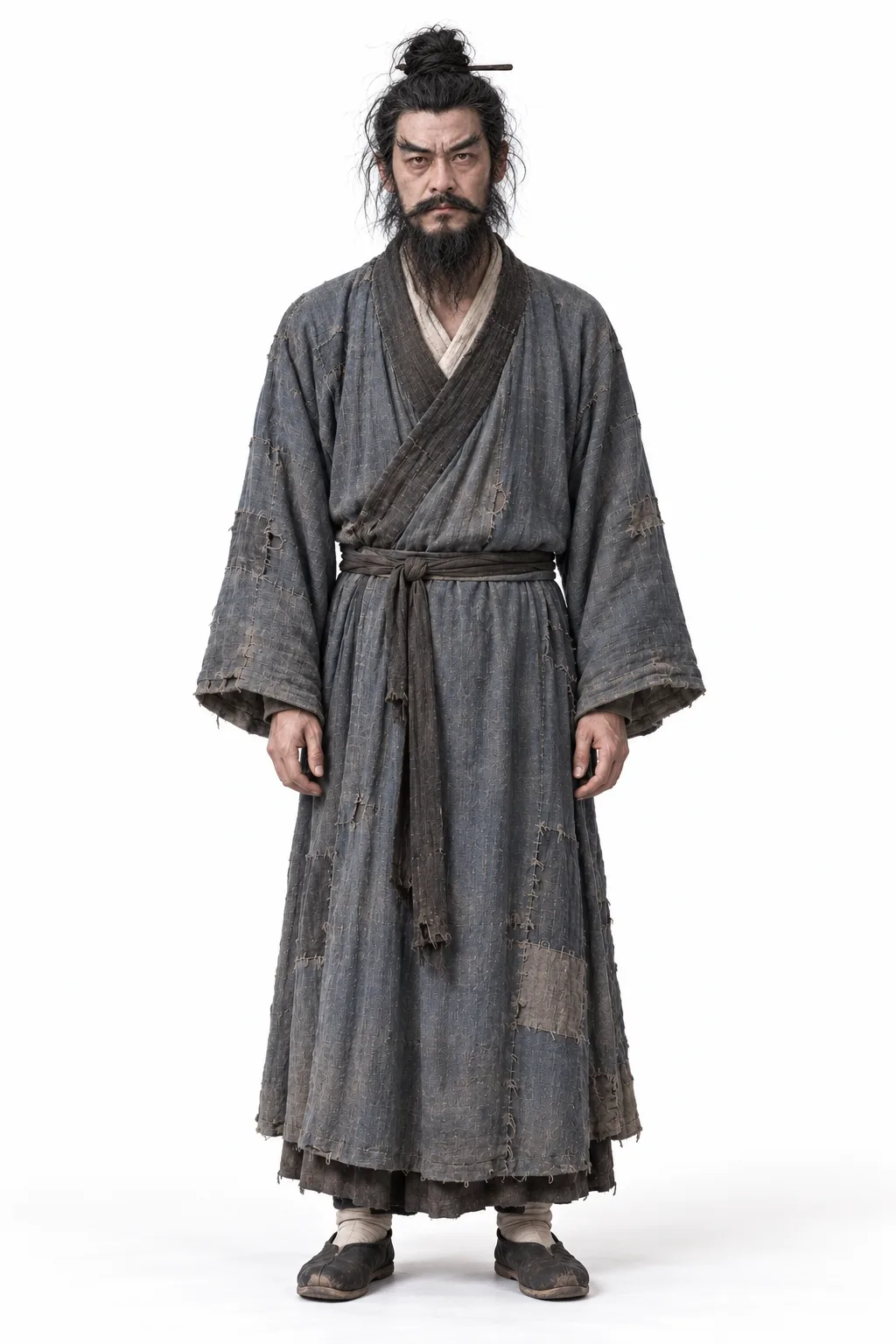
A case already closed
The same body and the same worn clothes, now bloodless and disordered. Before he can understand his death, the underworld has already reduced it to an administrative classification.

Authority with a scar
Remade by office and armed with the Iron Warrant, he appears formidable. The sword at his side can enforce a verdict—but it cannot tell him whether that verdict is just.
People inside the record
Family, witnesses, officials, and the accused each hold a piece of what the written verdict cannot contain.
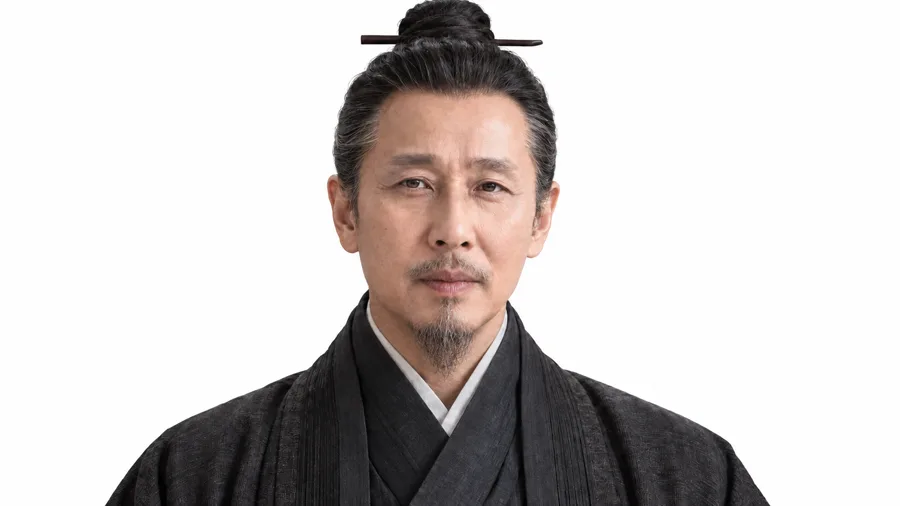
Mentor · Keeper of Verdicts
A wronged magistrate who once fought to correct the record, then began using the dead as instruments of his own answer.

The irreversible judgment
A fourteen-year-old servant condemned by a falsified ledger. What happens to him becomes the moral scar Zhong Kui cannot appeal.

Witness · Messenger
A timid, hungry, quick-witted ghost who learns that carrying a true record can demand more courage than carrying a weapon.

Friend · Man of action
He funded the journey, recovered a body the court discarded, and later organizes ordinary people to defend one another.

Sister · Healer
She loves her brother without becoming a monument to his sacrifice, and chooses her own life while protecting the wounded.
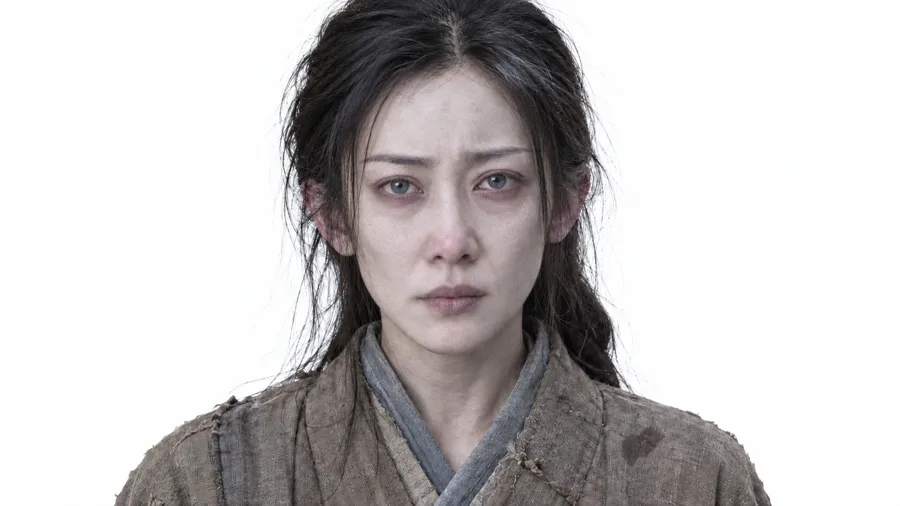
Mother · Counter-verdict
Named a monster by a sealed record, she becomes proof that protection, grief, and harm cannot be understood from a label alone.
Twelve-case architecture
The narrative moves through three acts, but every chapter advances the same inquiry: what evidence changes a judgment, and what must happen after the judge discovers he was wrong?
A brilliant scholar reaches the palace threshold and discovers that merit cannot protect him from appearance, power, or humiliation.
Even his death is misfiled. Master Si Lu offers him an Iron Warrant—and a place inside the machinery that judged him.
A voice-thief is guilty of harm and marked by an injustice his official record does not contain.
A sealed verdict calls a mother a monster. The room, the child, and the evidence tell another story.
Contradictory ledgers expose a pattern: someone has learned to turn grievance into administrative fact.
Zhong Kui protects his sister's wedding, but the choice costs a wronged boy the safety he promised.
To save a living child, Zhong Kui makes an irreversible judgment—and carries its white scar forward.
The mentor who taught him to question verdicts reveals how far a righteous grievance can be weaponized.
Stripped of warrant and office, Zhong Kui refuses an easy defence: he was wrong, and that does not make Si Lu right.
Without rank or ghost soldiers, he joins ordinary people who choose to hold a human line.
Evidence is read aloud, choice is returned to the dead, and judgment becomes a responsibility borne in public.
The man once denied entry refuses restored office and becomes the guardian of every threshold.
Selected narrative paintings
Rain, black wax, torn paper, worn thresholds, and one pale notch on a sword make consequence visible without turning the supernatural into spectacle.
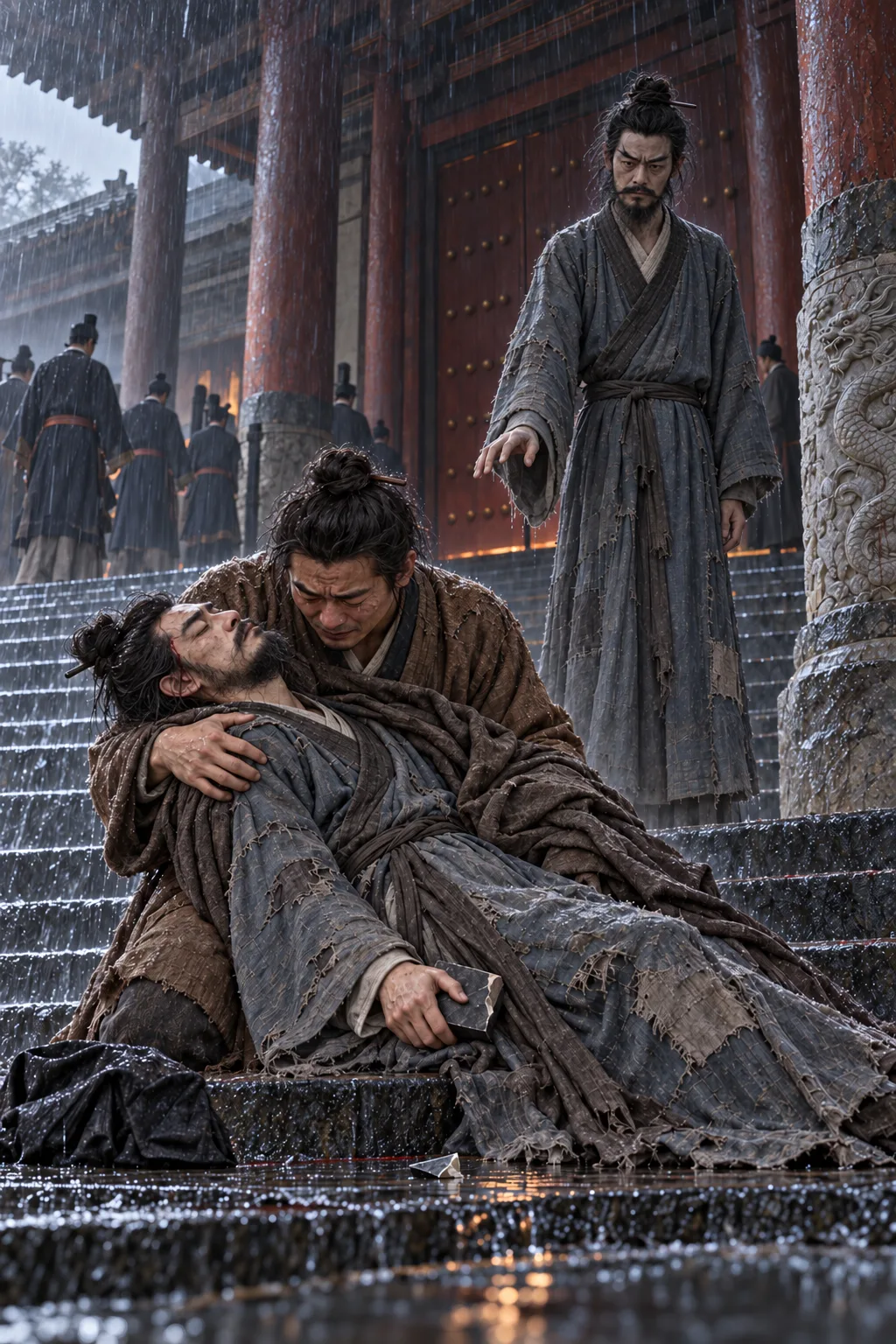
The palace threshold
The world of the living closes its door.
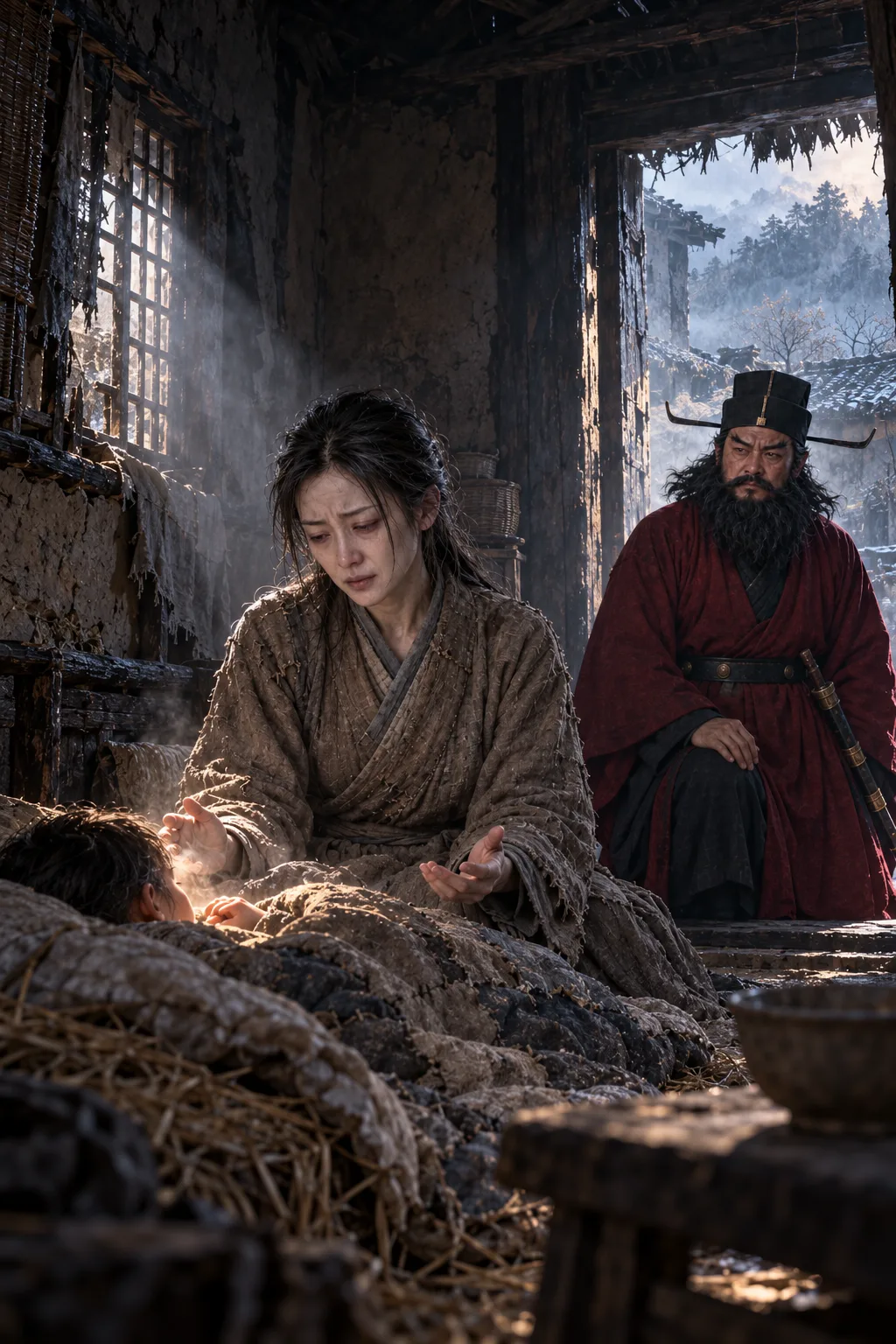
The sealed case
A verdict is contradicted by the room it describes.

The name-bound stroke
A necessary act leaves no clean conscience.
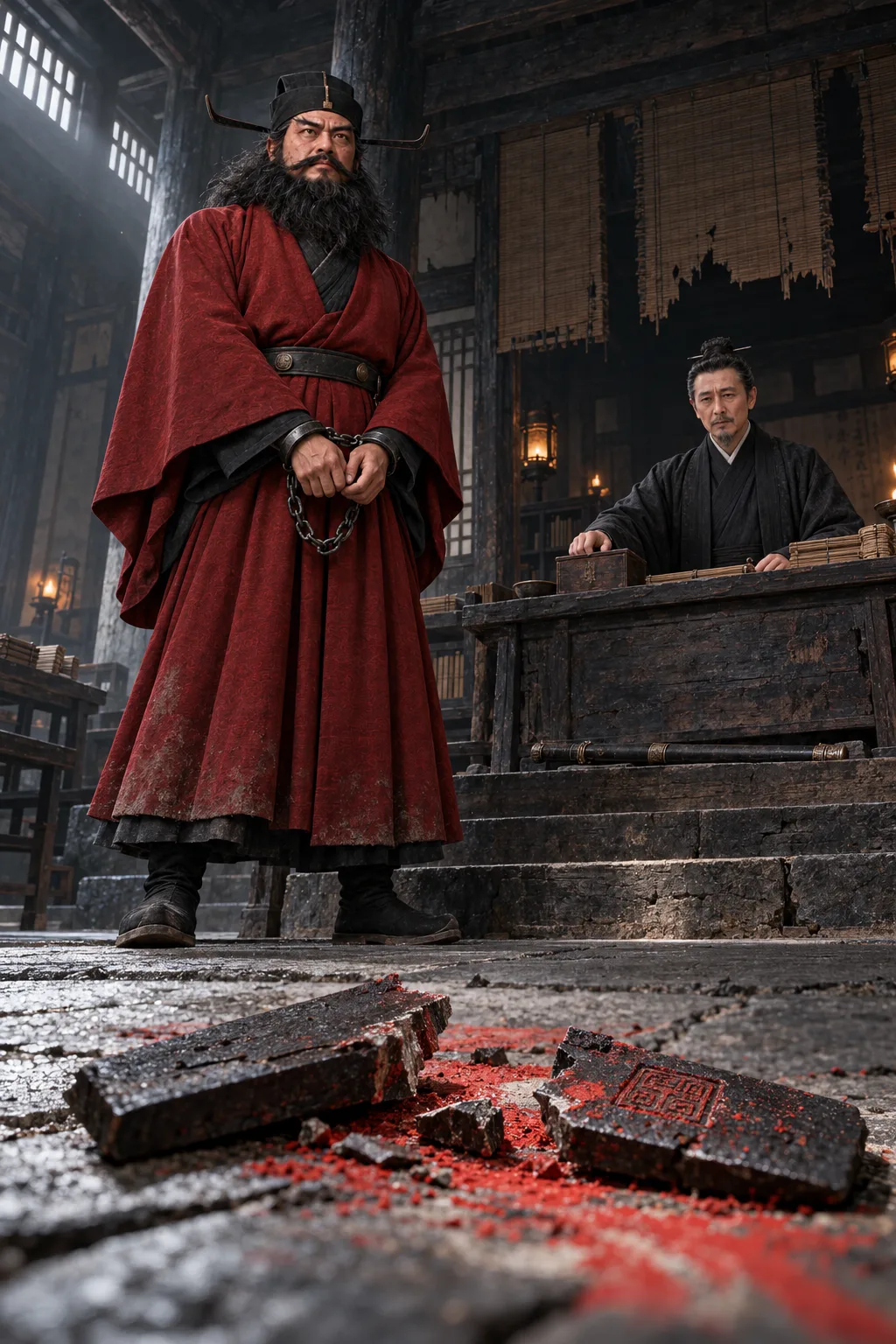
The broken warrant
Authority is removed; responsibility remains.
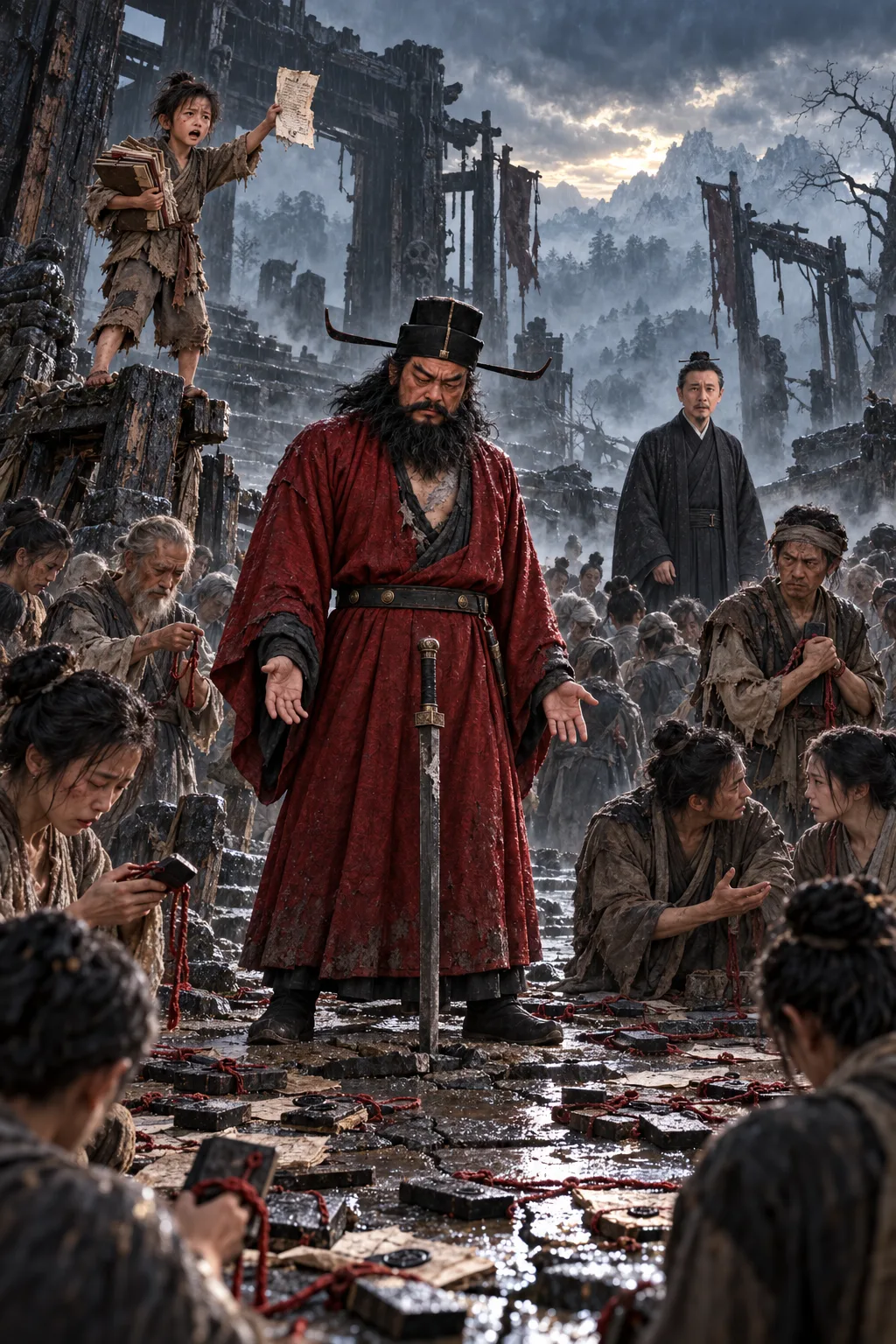
The last verdict
The dead hear the record and recover their choice.

The man at the door
Rejection becomes guardianship, not revenge.
The evidence chain
Five objects carry the case from institutional authority to historical memory. They are not collectibles; they are arguments made physical.
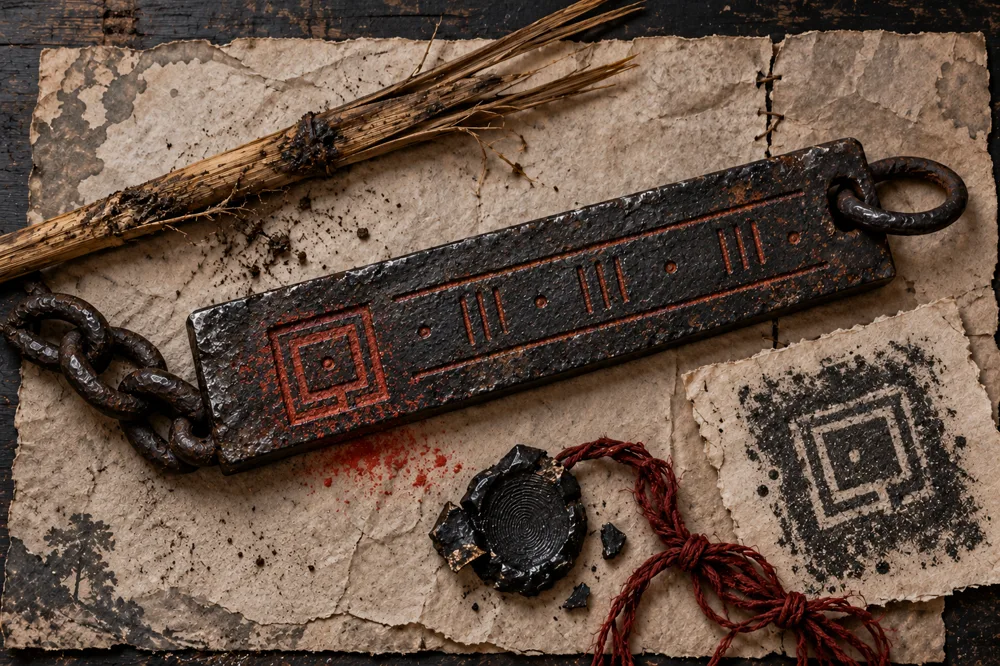
A black iron order can open a threshold and command an arrest. It cannot make the charge true.
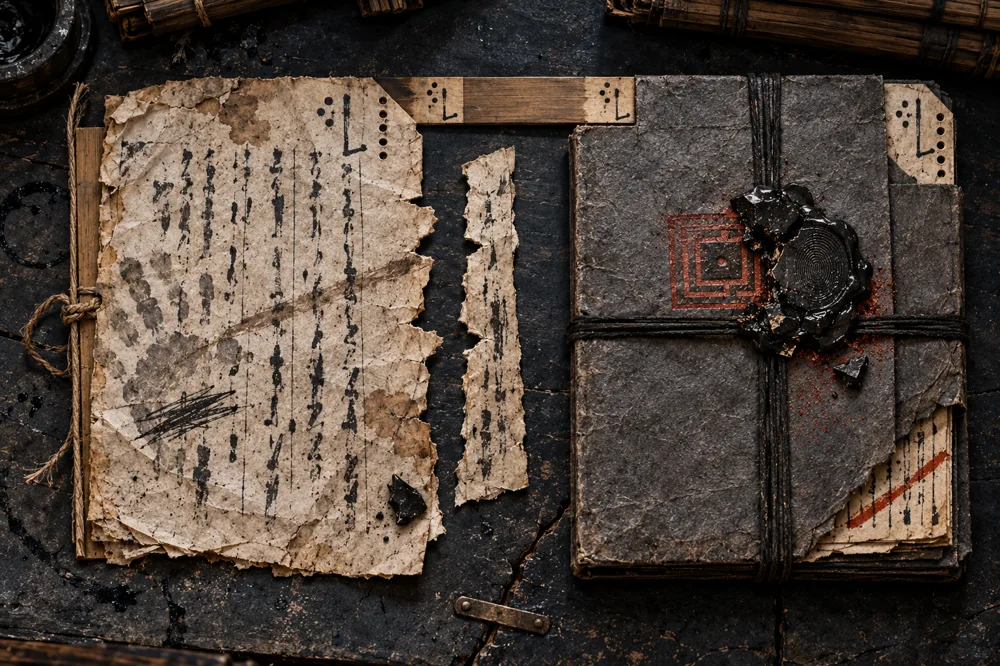
Two official histories for one dead boy reveal how injustice survives by becoming paperwork.
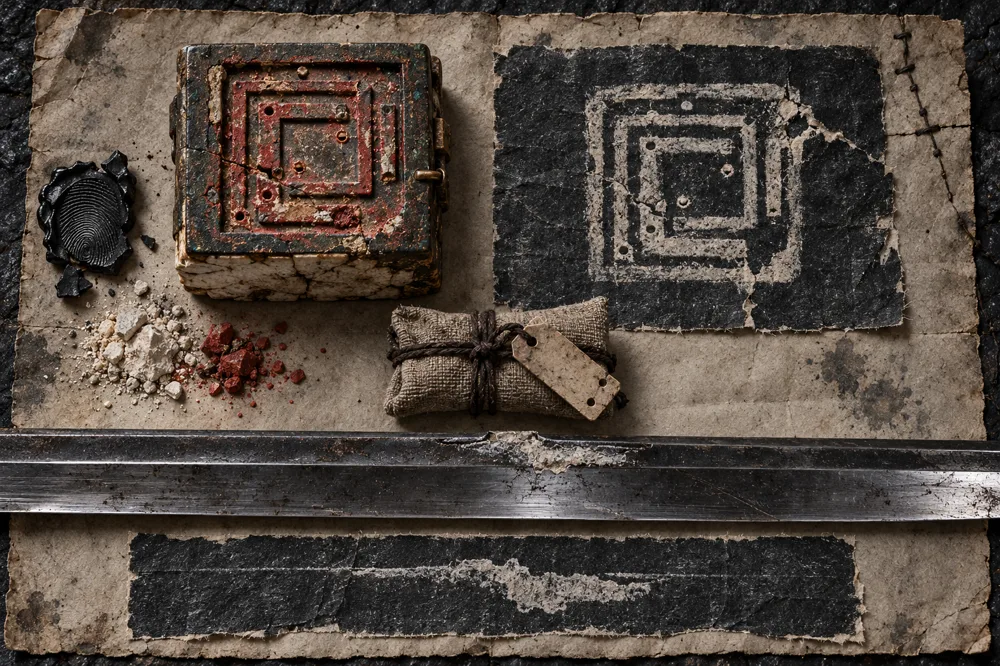
A real grievance is bound to revenge; beside it, the pale sword notch records the judgment made in Zhong Kui's own name.
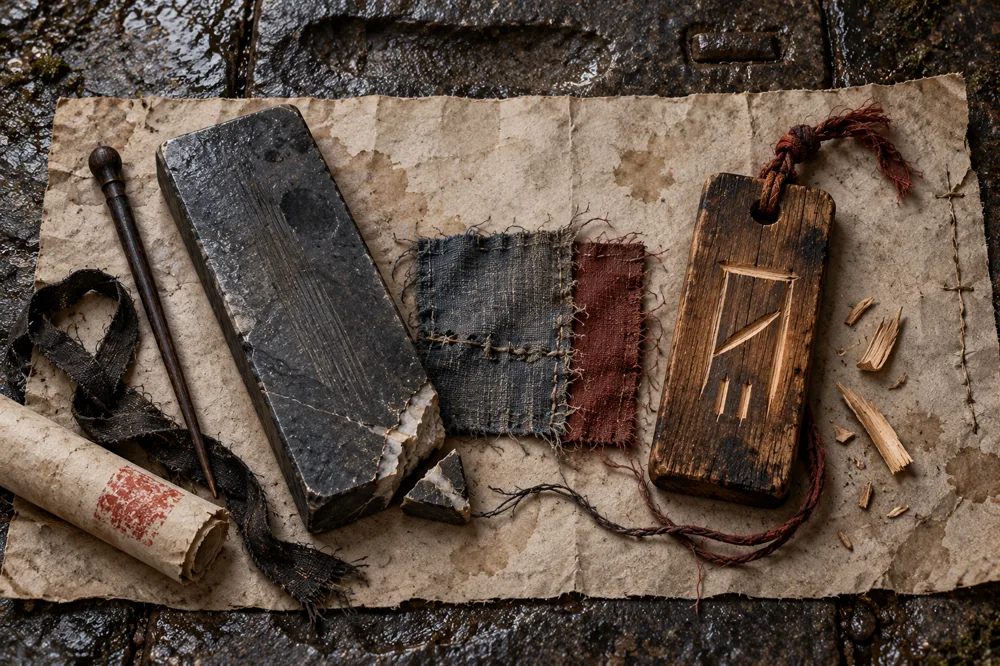
One object remembers the scholar who was rejected. The other marks the home he later chooses to guard.
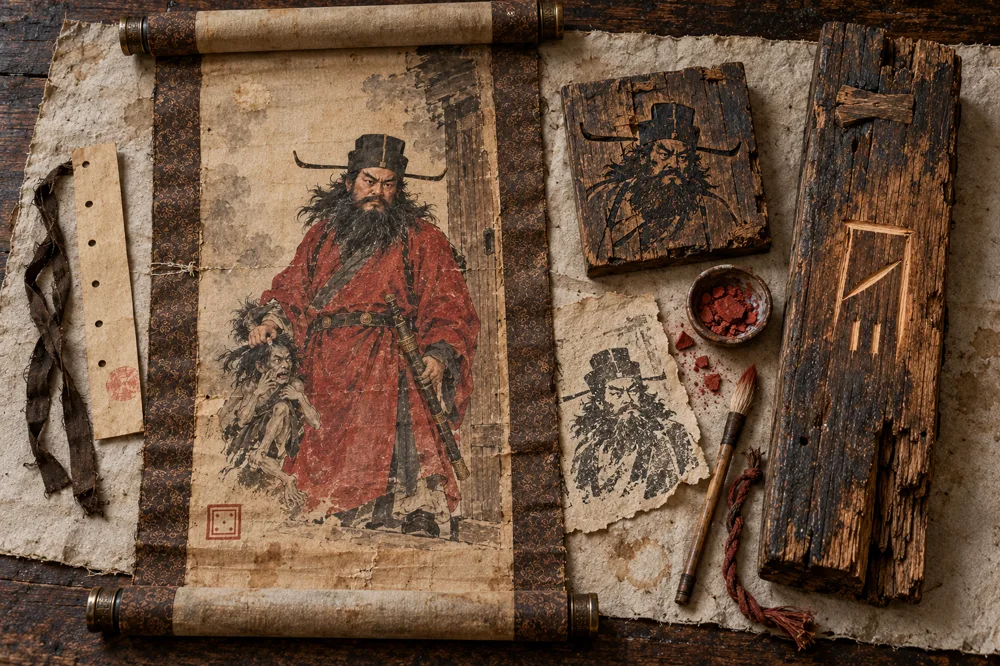
A later dynasty turns a rejected face into the image placed above a thousand doors.
The source tradition, original adaptation, three-stage identity, moral position, and current publication status.
It is an independent English-language literary adaptation about a wronged scholar who gains the authority to judge the dead, then discovers that official verdicts can preserve injustice. The story asks what gives anyone the right to judge—and what responsibility remains after a judgment causes irreversible harm.
ZHONG KUI: The Judge of Ghosts is undergoing final proofing. Join our reader list for immediate notification when the verified Amazon Kindle edition and collector prints become available.
PARDPro Cultural · Book 04
The verified Amazon destination will replace this placeholder after the official listing is confirmed.
Explore PARDPro Cultural